


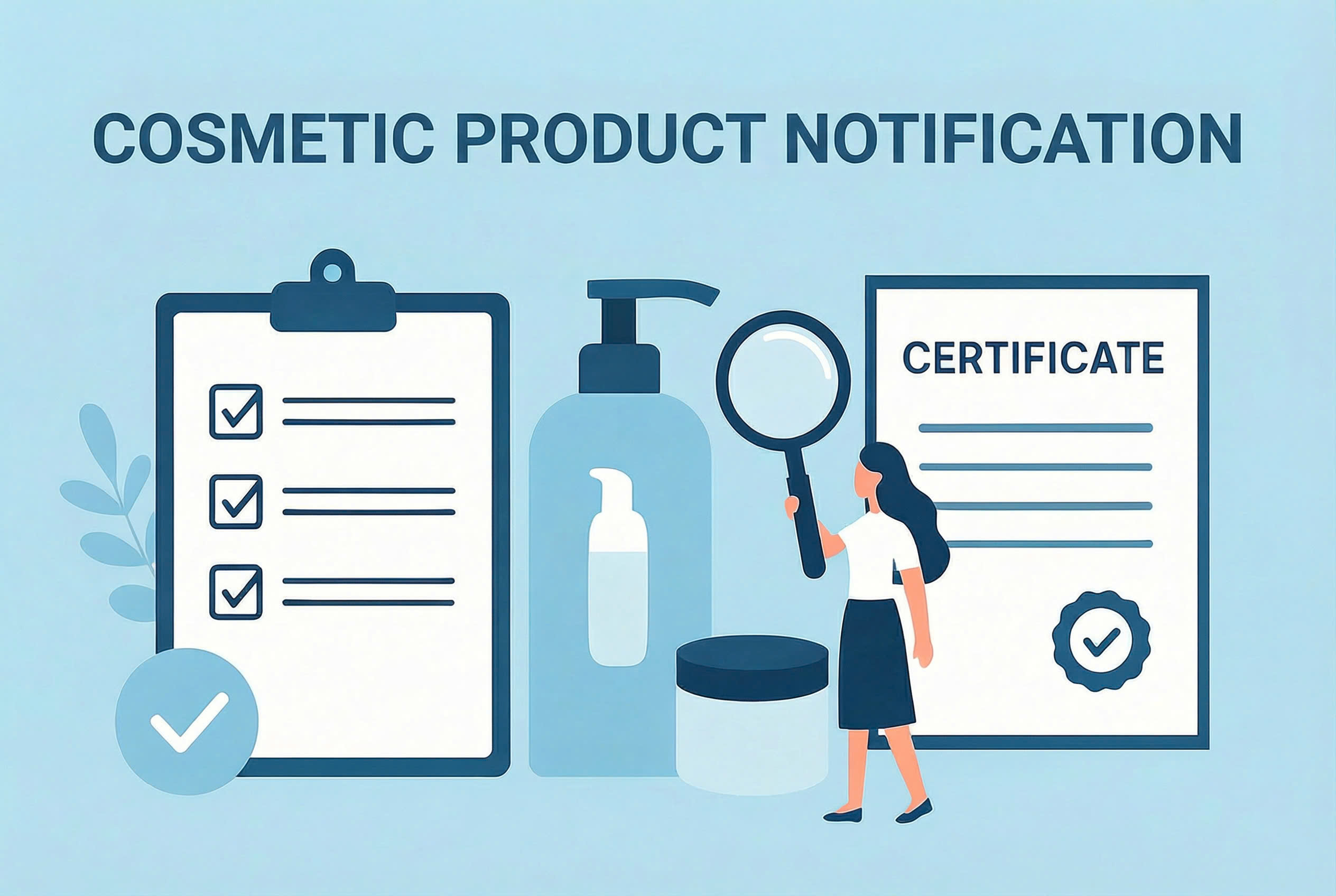
Cosmetic Product Notification is the first and most important legal step for a product to be legally circulated in the Vietnamese market. In the context of the rapidly growing beauty industry and increasing competition, businesses not only need to properly register cosmetics according to regulations, but also must clearly understand the entire operational chain—from cosmetic standards, cosmetic licenses, cosmetic certifications to quality management processes aligned with international standards. This is also the reason why Cos Agency’s legal consulting and operation services have become a reliable choice for many local and international brands seeking to enter the Vietnamese market.
Market overview and the role of Cosmetic Product Notification
Vietnam’s cosmetics industry has maintained impressive growth in recent years. According to Euromonitor (2023), the size of the Vietnamese beauty market reached USD 2.3 billion, with an expected compound annual growth rate (CAGR) of 8–10% per year until 2027. Vietnam is also among the fastest-growing emerging markets in Southeast Asia.
Vietnamese consumers prioritize products with transparent origins, clear standards, and internationally recognized certifications. This makes Cosmetic Product Notification—regulated by the ASEAN Cosmetic Directive—a mandatory step in every brand’s legal process. In fact, according to the Ministry of Health, products without a Cosmetic Product Notification receipt number are prohibited from distribution, advertising, and may be heavily penalized during market inspections.
Additionally, certain terms such as cosmetic CFS (Certificate of Free Sale) often cause confusion for businesses. This document confirms that the product is legally allowed to circulate freely in the exporting country. In this article, Cos Agency will analyze each legal requirement to help businesses have a clearer picture of the entire process.
By the way, one of the commonly encountered terms in the legal chain is “quality standards,” which relates to the concept of ISO, which you can read more about in this Wikipedia article (https://vi.wikipedia.org/wiki/Tiêu_chuẩn_ISO).
Why businesses are required to perform Cosmetic Product Notification
Establish a legal foundation for product circulation
Cosmetic Product Notification is the legal evidence that a product meets cosmetic standards as regulated by the Ministry of Health. This is not a formality, but a crucial boundary that allows businesses to distribute transparently and operate sustainably.
Strengthen brand credibility and consumer trust
Consumers are increasingly concerned about cosmetic certifications and ingredient safety. Products with complete legal documentation are often rated higher and more easily accepted by major distribution channels such as supermarkets, beauty stores, spas, and e-commerce platforms.
Reduce legal risks and penalties
According to Decree 117/2020/NĐ-CP, selling cosmetics without notification may result in fines of up to VND 30 million and product confiscation. This directly impacts cash flow, brand image, and corporate reputation.
Full analysis of legal requirements businesses must understand
1. Cosmetic standards and ingredient requirements
Cosmetics must comply with the list of prohibited substances, restricted substances, and substances requiring concentration disclosure under the ASEAN Cosmetic Directive. Businesses must review formulations, ingredient documents, and qualitative–quantitative analysis sheets to ensure safety before preparing the dossier.
2. Cosmetic certification and testing requirements
In Vietnam, products must have a test report from a laboratory accredited under ISO/IEC 17025. Testing typically includes:
-
Physicochemical parameters
-
Active ingredient quantification
-
Microbiology
-
Preservative safety evaluation
This ensures the product complies with Vietnam’s climate conditions, stability criteria, and safety requirements during use.
3. Cosmetic CFS for imported products
For imported cosmetics, the CFS must:
-
Be issued by a competent authority in the exporting country
-
Be valid within 24 months
-
Confirm that the product is freely circulated
This is a mandatory document when businesses carry out cosmetic registration in Vietnam.
4. Cosmetic license and dossier reception process
After preparing all required documents, businesses submit them to the Drug Administration of Vietnam. Valid dossiers will be issued a Cosmetic Product Notification receipt number, typically within 7–15 working days depending on the case.
Cosmetics notification process according to Cos Agency standards
Cos Agency develops a legal process aligned with international standards, helping businesses minimize risks and optimize implementation time.
Step 1: Legal review & formula consultation
-
Review ingredient list according to ACD
-
Check allowed concentration limits
-
Recommend formula modification if necessary
Step 2: Prepare cosmetic standard documentation
Including:
-
Quantitative formula
-
Ingredient origin documents
-
Test report
-
Product labeling according to regulations
Step 3: Prepare cosmetic CFS (for imported goods)
-
Verify CFS validity
-
Certified translation
-
Information verification per Drug Administration requirements
Bước 4: Submit the Cosmetic Product Notification dossier
The Ministry of Health’s single-window system requires businesses to prepare 100% of documents before submission. Cos Agency is responsible for:
- Checking dossier consistency
- Submitting the electronic dossier
- Tracking progress and responding to authorities
Bước 5: Receive the notification number & hand over the complete dossier
Businesses can use the notification number to:
- Print on packaging
- Register product circulation
- Expand distribution to retail chains, spas, salons, and e-commerce platforms
Market trends and new requirements for cosmetic businesses
Trend 1: Increased market inspections – stricter cosmetic licensing
According to the Ministry of Health’s 2023–2024 report, the amount of unverified cosmetics seized increases by more than 20% each year. Therefore, compliance with Cosmetic Product Notification is more critical than ever.
Trend 2: Consumers prioritize standards – transparent certifications
Young users (Gen Z and Millennials) are particularly concerned about:
- Clean ingredients
- Safety certifications
- Transparent information
This pushes businesses to fully invest in cosmetic certification before launching communications.
Trend 3: Sustainable supply chain & international standards
Many factories in Vietnam are shifting to testing technology that complies with:
- GMP – ASEAN
- ISO 22716
- HACCP
This enables products to meet standards for export to international markets.
Operational perspective: Why businesses need a professional partner?
Although Cosmetic Product Notification is a legal procedure, in reality it relates to:
- knowledge of cosmetic chemistry
- manufacturing standards
- advertising regulations
- testing
- compatibility between formulas and international regulations
Many businesses handling it themselves experience:
- dossiers being rejected
- invalid CFS
- incorrect labeling
- product launch delays of 1–3 months
Cos Agency solves all the above issues with a systematic process, helping businesses shorten time-to-market and avoid risks of product withdrawal.
Conclusion
Cosmetic Product Notification is a strong legal foundation for sustainable growth in the beauty industry. From cosmetic registration to cosmetic standards, cosmetic certification, or cosmetic CFS for imported goods—every step must be handled accurately, transparently, and in compliance with regulations.
With practical operational experience from hundreds of beauty brands locally and internationally, Cos Agency focuses on building legal–commercial–operational services that help businesses shorten timelines, reduce risks, and expand markets securely.