


Cosagency’s core proposition is simple: use micro kol partnerships to create consistent, compliant, data-driven growth for beauty and FMCG brands, rather than chasing short-term viral spikes.
The global beauty and personal care industry is already worth more than 500 billion USD and grew around 4–5% in 2024 despite macro uncertainty. (Vogue) In parallel, the Chinese beauty and personal care market alone reached about 71 billion USD in 2024 and is forecast to approach 88 billion USD by 2030, underlining how regional demand is shifting and expanding. (Cosmoprof-Asia) Vietnam sits in the middle of these flows: a young, mobile-first population, high social media penetration, and strong appetite for K-beauty, J-beauty, and global prestige brands. (Viettonkin)
In that environment, large celebrity endorsement is often too broad, too expensive, and too detached from actual purchase journeys on TikTok Shop, Shopee, Lazada, or offline chains. Micro kol, by contrast, allows Cosagency to match each SKU – ampoules, serums, sun care, cleansing oils – with specific audiences based on skin type, price sensitivity, and lifestyle, and to plug those creators directly into social commerce funnels.
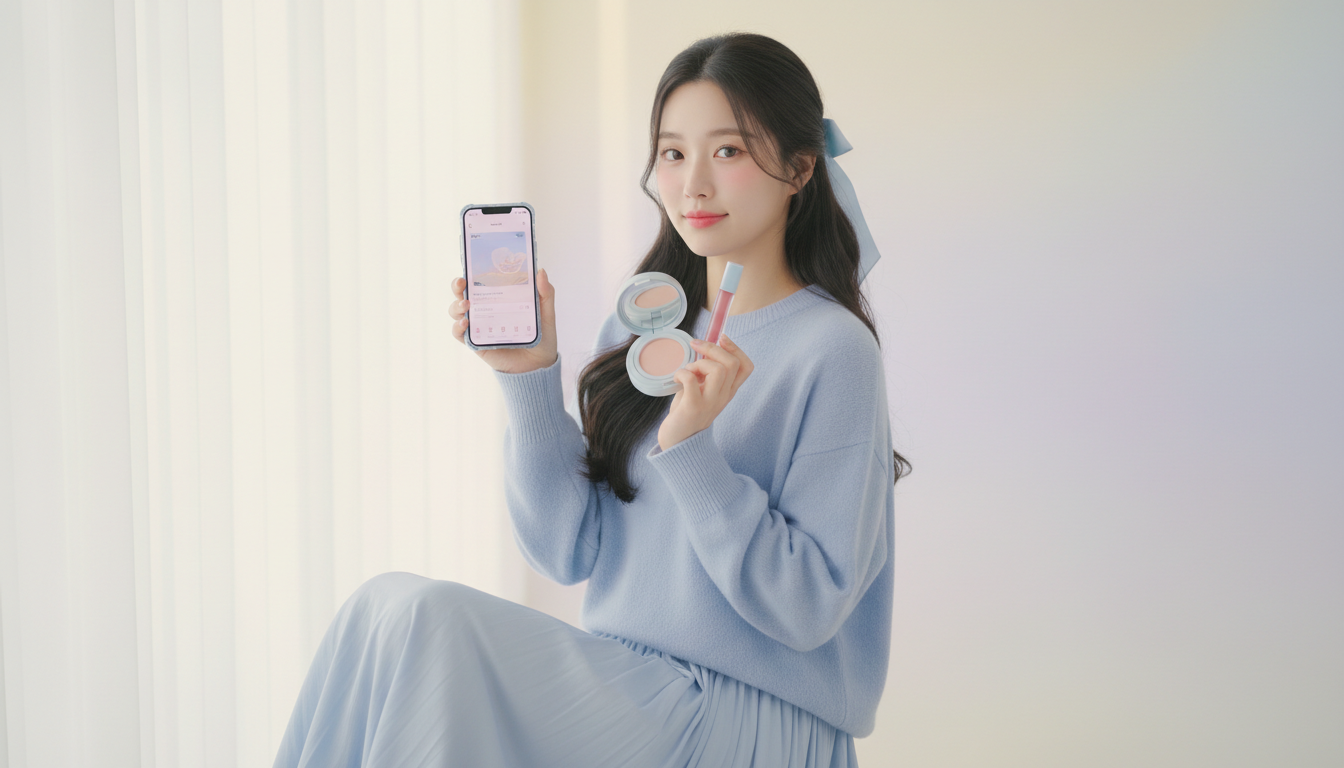
Why Beauty Micro Influencers Win in a Saturated Beauty Market
Beauty micro influencers are the operational backbone of Cosagency campaigns. Instead of renting reach from one or two mega-stars, the agency builds layered programs with dozens or hundreds of creators whose trust is earned over years in a single category.
According to Nielsen, more than 90% of consumers trust recommendations from people they follow more than traditional ads, which makes beauty micro influencers particularly powerful in high-involvement categories like skincare and cosmetics. (promoty.io) When a creator with 10,000–100,000 followers demonstrates texture, absorption, before-and-after routines, and ingredient logic, conversion is driven by perceived authenticity, not media pressure.
Cosagency uses this to design portfolios of micro kol and beauty micro influencers for each brand:
- Top-of-funnel profiles that specialize in “routine” and lifestyle content.
- Mid-funnel micro beauty influencers with deeper ingredient and formulation knowledge.
- Bottom-funnel creators on TikTok Shop or Shopee Live focused on closing sales with vouchers, bundles, and live-streaming.
Where many brands still treat micro influencers beauty as a one-off “gift box” tactic, Cosagency treats them as a channel that needs annual budgeting, clear KPIs, and integration with media, CRM, and trade marketing.
How Micro Beauty Influencers Support a Compliant Cosmetics Go-To-Market
Micro beauty influencers only create sustainable value if the legal foundation is respected from day one. Cosmetics are regulated across multiple layers: product notification or registration, ingredient lists, claims control, and advertising approvals in key markets. For Korean and global brands entering Vietnam, that means:
- Ensuring Vietnamese labels and claims align with ASEAN cosmetics regulations and local circulars.
- Aligning all influencer scripts and visual claims with what has been approved on packaging and registration dossiers.
- Avoiding high-risk language around medical treatment, whitening promises, or therapeutic benefits that regulators may challenge.
Cosagency builds this into every micro kol brief. Before any beauty micro influencers go live, the agency verifies INCI lists, cross-checks claims with local regulatory advisors, and clarifies what can and cannot be said in live streams, short-form videos, or static posts. That discipline protects both the brand and the influencer.
This is especially critical as influencer marketing budgets grow. Global influencer marketing spend reached about 6.16 billion USD in 2023, up more than 23% from 2022, and is projected to exceed 7.1 billion USD in 2024. (Division-D) As more money flows through the channel, regulators will naturally pay more attention to product review influencers and undisclosed sponsorships. Cosagency’s traditional, compliance-first approach is designed for that reality, not for short-term hype.
For a high-level definition of influencer marketing within this context, see: https://en.wikipedia.org/wiki/Influencer_marketing
Micro Influencers Beauty and the End-to-End Supply Chain
Most agencies only look at content and engagement. Cosagency deliberately connects micro influencers beauty to the entire supply chain – from manufacturing to last-mile delivery – because operational bottlenecks can quickly destroy brand trust.
For imported beauty and FMCG brands, Cosagency works with partners across the chain:
- Manufacturing and OEM/ODM labs in Korea and other markets, to align launch calendars with campaign timing.
- Testing and quality-control partners to ensure claims around “dermatologically tested” or “suitable for sensitive skin” are backed by real protocols.
- Warehousing and fulfillment teams to guarantee that when a micro kol drives a spike in orders through a live stream, stock is ready and SLAs are met.
- Local distributors and retail chains to coordinate promotions, testers, and product availability after digital buzz is created.
By integrating this supply-chain view, Cosagency can tell beauty micro influencers exactly which shades, formats, or bundles to push, knowing that the product is available and compliant. That avoids the common situation where a viral TikTok generates demand for a SKU that is out of stock, incorrectly labeled, or not yet fully registered.

Cosagency’s Influencer Booking Platform for Regulated Beauty and FMCG Brands
To manage thousands of collaborations without losing control, Cosagency relies on an internal influencer booking platform approach rather than ad-hoc spreadsheets and chats. While the system is tailored to the agency, the logic is straightforward:
- Central database of micro kol, beauty micro influencers, and product review influencers, tagged by skin concern, content format, engagement quality, and brand fit.
- Clear fee structures and contract templates for different campaign types: seeding, content-only, live commerce, traffic driving, or conversion-based deals.
- Workflow for legal and regulatory review of each brief, caption, and key visual before it goes live.
- Tracking layer that connects influencer booking platform data to marketplace dashboards on Shopee, Lazada, TikTok Shop, and brand D2C sites.
Globally, only about 7% of marketing leaders feel fully equipped with the tools and data they need for success, according to a 2023 GfK CMO Survey. (NIQ) Cosagency’s structured platform is designed to ensure beauty brands entering Vietnam are not part of the unprepared majority.
For more information on Cosagency and its integrated marketing services, brands can refer to the main company site at https://dichvumarketingonline.com/ as the central hub of solutions.
Product Review Influencers as a Long-Term Brand Asset
In beauty and FMCG, product review influencers do more than unbox and swatch. They act as decentralized R&D feedback loops and market-insight generators.
Cosagency encourages brands to treat these creators as long-term partners, not one-time reviewers. When a micro kol consistently reviews new launches in a brand portfolio, several advantages accumulate:
- Deeper understanding of formula upgrades, packaging changes, and range architecture.
- Ability to compare generation-to-generation improvements in texture, finish, or wear-time.
- Honest feedback on shade ranges, scent profiles, or skin-type suitability that can be fed back to product and supply-chain teams.
This is especially relevant as K-beauty goes through its “second wave,” where consumers demand more science-backed, ingredient-focused products rather than purely aesthetic trends. (Vogue) Product review influencers who have been embedded with a brand for multiple years can explain these evolutions clearly and credibly to their audiences.
Micro KOL Operations at Cosagency: From Brief to Business Outcome
From an operational standpoint, Cosagency runs micro kol campaigns with the same discipline that multinational FMCG groups expect from traditional media. The process typically includes:
- Market and category audit
The team reviews category dynamics, competitor launches, pricing corridors, and shopper behavior on key platforms. The global beauty market, for example, surpassed 540 billion USD in 2024 with social commerce as a major growth driver, particularly via TikTok and marketplace live streaming. (Vogue) - Compliance and claims review
Before any beauty micro influencers are briefed, Cosagency aligns with the brand’s regulatory team on allowed claims, ingredient narratives, and mandatory disclosures (sponsored content, ad tags, and local disclaimers). - Micro beauty influencers selection and casting
Creators are evaluated on audience quality, historical behavior, and brand-safety risk – not just follower count. Engagement authenticity, tone of voice, past collaborations, and adherence to guidelines are all documented in the influencer booking platform. - Content and commerce integration
Content calendars are synchronized with shipment arrivals, marketplace campaigns, and offline activations. Micro influencers beauty are assigned specific roles in the funnel: education, trial, conversion, or retention. - Measurement and optimization
Using campaign and marketplace data, Cosagency evaluates cost per incremental unit sold, cost per new buyer, and uplift in brand search. This reflects the broader reality that influencer marketing is now a measurable driver of brand lift and sales, not just “awareness.” (Nielsen)
This structured operating model ensures that every micro kol program is accountable to commercial metrics, while still respecting the creativity and personal brands of each creator.
Building a Future-Proof Micro KOL and Beauty Strategy with Cosagency
The beauty and FMCG landscape will only become more complex: stricter regulations on claims and data, more fragmented channels, and more demanding consumers who expect transparency and proven efficacy. At the same time, influencer marketing budgets are expanding and shifting towards smaller, more trusted creators.
For Korean and international brands entering or scaling in Vietnam, the path forward is clear:
- Use micro kol as a strategic asset, not a tactical afterthought.
- Build a diversified bench of beauty micro influencers, micro beauty influencers, and product review influencers who understand both product science and local consumer behavior.
- Anchor every campaign in regulatory compliance, supply-chain readiness, and transparent measurement.
Cosagency’s role is to orchestrate all of this – from regulatory checks and supply-chain coordination to influencer booking platform operations and performance analytics – so that brands can focus on what they do best: formulating products that genuinely improve skin, hair, and daily routines.
In a market where consumers are better informed, more skeptical, and more digitally connected than ever, a disciplined, long-term micro kol strategy is not optional. It is the difference between a brand that flashes briefly on social media and a brand that earns a durable position in the beauty baskets of Vietnam and the wider region.